
IT Q&A: Rubber Glove Price Comparisons and Factors Influencing Costs
Rubber gloves, as daily protective equipment, are widely used in various industries. Understanding the characteristics of different glove materials can help users make reasonable choices based on their actual needs. This article will analyze the cost and pricing of rubber gloves, providing a purchasing guide for consumers.
Rubber Glove Overview
Rubber gloves are a widely used personal protective equipment, primarily designed for hand protection against substances such as chemicals, liquids, dirt, and biological hazards. Here is an overview of rubber gloves:
The construction of rubber gloves typically includes a body that fits the hand, along with possible wrist bands or sleeves to extend the protection range. The main materials used for rubber gloves are natural rubber and synthetic rubber.
Natural rubber gloves, as the name implies, are made from the latex juice of rubber trees and offer good elasticity and abrasion resistance, as well as good breathability, making them suitable for long-term wear. However, natural rubber gloves have limited protective capabilities against certain chemicals, such as acids and alkalis.
Synthetic rubber gloves, on the other hand, are produced from petrochemical products through polymerization reactions, such as nitrile rubber (NBR), chloroprene rubber (CR), polyvinyl chloride (PVC), and others. Synthetic rubber gloves can be formulated and processed to have protective properties against a variety of chemicals, and they are also relatively cost-effective.
There are many types of rubber gloves available, including medical gloves, food-grade gloves, industrial gloves, and protective gloves, among others. Medical gloves are used for medical procedures and require high cleanliness and biocompatibility; food-grade gloves are used in food processing and cooking and need to be tasteless and non-toxic; industrial gloves are designed for various industrial environments, such as high and low temperatures, oil, and dirt, and have corresponding heat and wear resistance; protective gloves are focused on protection against specific chemical or physical hazards.
When selecting rubber gloves, several factors should be considered:
-
Protective Performance: Choose the appropriate glove material based on the harmful substances in the working environment, such as the protective needs against oils, chemicals, acids, and alkalis.
-
Sensation and Comfort: The elasticity, thickness, and fit of the gloves can affect the wearer’s comfort, which is particularly important when wearing them for extended periods.
-
Breathability: In high-temperature or high-humidity environments, breathable gloves can reduce sweat accumulation and reduce skin discomfort.
-
Antimicrobial Properties: For industries such as healthcare and food processing, gloves need to have certain antimicrobial properties.
-
Price and Cost-Effectiveness: Choose a glove material that offers good value for money while meeting protective requirements.
In summary, as an important personal protective equipment, the material, type, and performance of rubber gloves are crucial for the safety of users. Proper selection and use of rubber gloves can effectively reduce safety risks during work.

Compare Materials of Rubber Gloves
-
The main materials of rubber gloves include natural rubber (NR), synthetic rubber (such as nitrile rubber NBR, chlorinated rubber CR, chlorosulfonated polyethylene CSM, etc.), as well as plastic materials like PVC (polyvinyl chloride) and PE (polyethylene).
-
Natural rubber gloves are known for their excellent elasticity and abrasion resistance, making them suitable for high-intensity hand protection scenarios such as machinery processing and welding. However, natural rubber gloves have relatively weak protection against oils and certain chemicals.
-
There are many types of synthetic rubber gloves, among which nitrile rubber gloves have strong protection against oils and a variety of chemicals, making them suitable for environments such as chemical industries and laboratories. Chlorinated rubber gloves, on the other hand, have good heat resistance and chemical resistance, suitable for environments where high temperatures and chemical contact are involved.
-
PVC and PE gloves are plastic materials with lower costs, but they have less elasticity. They are suitable for general protection, such as food processing and daily cleaning. PVC gloves have good oil resistance, while PE gloves are lighter and more suitable for single-use applications.
-
In terms of hand feel, natural rubber gloves are usually softer and more comfortable than synthetic rubber gloves, but synthetic rubber gloves are widely used in specific fields such as medicine and food processing due to their odorless, dust-free properties.
-
In terms of durability, synthetic rubber gloves are generally more durable than natural rubber gloves because the molecular structure of synthetic rubber is more stable and less prone to aging.
-
In terms of environmental protection, natural rubber gloves are relatively environmentally friendly as their raw materials come from sustainably cultivated rubber trees. The production process of synthetic rubber gloves, however, may involve petrochemicals, which have some impact on the environment.
-
In terms of price, natural rubber gloves are usually more expensive due to the higher cost of raw materials. The cost of plastic gloves is the lowest, but their service life is shorter.
-
When purchasing gloves, one should consider factors such as the environment of use, protective requirements, and budget to choose the appropriate material.
-
In summary, different types of rubber gloves have their own advantages and disadvantages, and users should make reasonable choices based on actual needs.
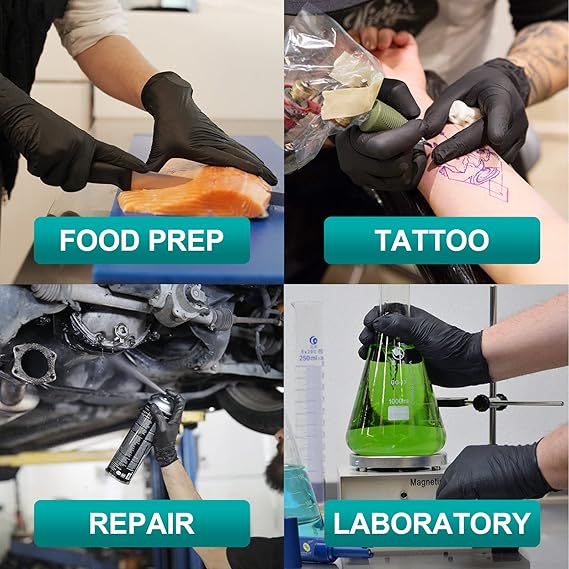
Scenario Analysis of Rubber Gloves Application
Rubber gloves have a wide range of applications in everyday life, and the following are several main areas of use:
In the medical field, rubber gloves are an essential protective item. Doctors and nurses need to wear them during surgeries and nursing procedures to prevent cross-infection and to provide good hand protection.
In the food processing industry, rubber gloves are extensively used in the processing, packaging, and transportation of food. These gloves prevent food from being contaminated, ensuring food safety.
In laboratory environments, rubber gloves are basic protective equipment for chemical and biological experiments. They can resist the erosion of chemicals such as acids, bases, and organic solvents, protecting the experimenter’s hands.
In the manufacturing industry, rubber gloves are used for various mechanical operations. For example, electricians need to wear insulating rubber gloves when handling high-voltage wires to prevent electric shocks. Moreover, when handling heavy objects or dealing with sharp items, rubber gloves also provide necessary protection.
In household cleaning and gardening work, rubber gloves are also commonly used tools. They isolate the hands from direct contact with cleaning agents, detergents, and other chemicals, reducing skin irritation.
In the service industry, such as catering, hotels, and beauty salons, rubber gloves are used to handle utensils, kitchenware, and beauty tools, both preventing cross-contamination and protecting the hand hygiene of service personnel.
In agricultural activities, rubber gloves are protective gear for farmers during planting, picking, and fertilizing work. They help avoid damage to the hands from plant juices, mud, and other substances.
Rubber gloves also find applications in the sports field, such as diving, water skiing, and cycling. Wearing rubber gloves can enhance hand grip and improve safety.
In summary, the application scenarios of rubber gloves are very extensive, from medicine, food, and research to various aspects of daily life, where they can be seen everywhere. Their multifunctionality and protective characteristics make rubber gloves an indispensable protective product in modern society.

Please provide the translation directly.
The cost and price of rubber gloves are influenced by various factors, which can be analyzed as follows:
-
Raw Material Costs: The main raw material for rubber gloves is natural rubber or synthetic rubber. Natural rubber is derived from rubber trees and its price is affected by climate, yield, and market demand; synthetic rubber, on the other hand, is produced from petrochemical products and its price fluctuates with the price of crude oil. Raw material costs are the most direct factor affecting the overall cost of the gloves.
-
Production Process: The production process of rubber gloves includes vulcanization, shaping, inspection, and other stages. Different production processes have different equipment and technical requirements, thus varying in cost. For example, high-temperature vulcanization processes are more costly but result in gloves with better durability and elasticity; while low-temperature vulcanization processes are less expensive but may have slightly lower performance.
-
Brand and Quality: Gloves from well-known brands usually come with higher quality guarantees, and therefore are priced higher than those from generic brands. High-quality gloves use superior rubber materials, stricter production standards, and more rigorous inspection processes, leading to higher costs.
-
Specifications and Sizes: The specifications and sizes of gloves also affect costs and prices. There are cost differences in raw materials, processing, and packaging for gloves of different specifications and sizes, which in turn affect the price.
-
Packaging and Transportation: The packaging materials and transportation methods for gloves can also impact costs. High-quality packaging materials and environmentally friendly packaging may cost more, while the distance of transportation and transportation methods can also cause price fluctuations.
-
Market Demand: Changes in market demand can affect the supply and demand relationship of gloves, which in turn impacts the price. During periods of strong demand, the price of gloves may rise; conversely, when demand falls, prices may decrease.
-
Market Competition: In a competitive market, manufacturers may adopt price-cutting strategies to compete for market share, which can also affect the price of gloves.
-
After-Sales Service: Providing comprehensive after-sales services such as returns, exchanges, and warranties adds to the cost of the enterprise, which is ultimately reflected in the price of the gloves.
In summary, the cost and price of rubber gloves are influenced by a variety of factors including raw materials, production processes, branding, quality, specifications, packaging, market demand, market competition, and after-sales service. Consumers can make reasonable choices based on their needs and sensitivity to price by considering these factors.

User Selection Guide: Key Points for Buying Latex Gloves
Material Selection: Understand the differences between rubber and vinylSize Selection: Ensure the gloves fit the hand properly, avoiding either being too large or too smallApplication Consideration: Choose the appropriate type of rubber gloves based on the work environmentDurability Assessment: Consider the gloves’ abrasion resistance and durabilityProtection Level: Select gloves with the appropriate protection level based on potential risksAllergies: Be aware of any allergic reactions that the material may cause in usersPrice Comparison: Compare different brands and specifications of gloves within your budgetBrand Reputation: Choose reputable brands to ensure glove quality and after-sales serviceCleaning and Maintenance: Consider the gloves’ cleaning and maintenance methods for long-term useEnvironmental Adaptability: Select gloves based on the temperature, humidity, and other factors of the work environmentRegulatory Requirements: Ensure the gloves comply with relevant industry standards and regulations