Nitrile Gloves: IT’s Q&A on Superior Tear Resistance and Applications
In industrial production, healthcare, and everyday household chores, gloves serve as protective gear where their performance and suitability are of paramount importance. Nitrile (chloroprene) gloves are widely favored due to their exceptional resistance to chemicals, oils, and tears. This article will delve into the tear resistance of nitrile gloves, analyze their application advantages in different fields, and also provide for purchasing and using them.
Product Overview
Nitrile gloves with excellent tear resistance are renowned for their superior chemical and oil resistance, making them important protective equipment in industrial safety and personal hygiene. These gloves are made from high-performance nitrile synthetic rubber and possess the following significant features:
- Superior Tear Resistance: Compared to traditional latex and PVC gloves, nitrile gloves have higher tear strength, effectively preventing the gloves from tearing when in contact with sharp objects or during forceful gripping.
- Good Chemical Resistance: Nitrile gloves offer resistance to a variety of chemicals, including solvents, acids, bases, and oils, making them suitable for environments such as chemical plants and laboratories.
- Comfortable Fit: The inner surface of the gloves features anti-slip particles to enhance grip, while also providing a good tactile feel, reducing discomfort during prolonged wear.
- Safe and Environmentally Friendly: Nitrile gloves are free of latex proteins, making them suitable for those allergic to latex, and are produced with strict control of harmful emissions, complying with environmental standards.
The product is widely used in the following fields:
- Industrial Production: In environments requiring hand protection in manufacturing and electronics, nitrile gloves effectively protect workers from injuries caused by chemicals, sharp objects, and more.
- Medical Care: In medical procedures, nitrile gloves prevent cross-contamination and provide sufficient protection, suitable for operations and nursing work.
- Laboratory Research: Nitrile gloves are an essential protective tool for laboratory researchers during chemical experiments, ensuring experiment safety.
- Daily Life: In daily activities such as cleaning and gardening, nitrile gloves also provide necessary protection, safeguarding hands from the irritation of chemical cleaners and more.
When purchasing and using tear-resistant nitrile gloves, the following points should be noted:
- Select the Correct Size: Gloves that are too tight or too loose can affect the effectiveness and comfort of use, so it is important to choose the right size.
- Inspect Glove Quality: When purchasing, check for any defects such as tears or bubbles in the gloves to ensure their integrity and functionality.
- Proper Wear: When wearing, ensure that the fingertips and wrist parts of the gloves fit tightly to prevent the penetration of chemicals.
- Regular Replacement: If gloves show signs of wear or damage during use, they should be replaced promptly to ensure the protective effect.

Tear Resistance Analysis
The tear resistance of Nitrile gloves is one of their key performance characteristics, directly affecting their durability and safety in actual use. Below is a detailed analysis of this feature:
The tear resistance of Nitrile gloves primarily originates from the material’s molecular structure. Nitrile is a synthetic rubber that contains a large number of carbon atoms in its molecular chains, which makes the gloves strong in their molecular bonding when subjected to external forces, thus being less prone to tearing. Specifically:
-
Molecular Structure Stability: The molecular structure of Nitrile features strong carbon-carbon bonds, which make the gloves less likely to break when stretched or sheared, thereby demonstrating excellent tear resistance.
-
Elastic Recovery Ability: Nitrile gloves have good elastic recovery after being torn, which allows them to quickly return to their original shape, reducing the spread of the tear and extending their lifespan.
-
Cross-linking Density: During the manufacturing process of Nitrile gloves, cross-linking agents are used to form cross-linked structures between the molecular chains, which increase the gloves’ strength and toughness, making them more stable when subjected to tearing forces.
-
Thickness and Strength Relationship: The thickness of Nitrile gloves is directly proportional to their tear resistance, meaning the thicker the gloves, the stronger their tear resistance. However, while ensuring tear resistance, it is also necessary to consider the gloves’ flexibility and comfort.
-
Testing Method: The tear resistance is typically evaluated through laboratory tear strength tests. During the test, the glove sample is fixed on a tear tester and subjected to a certain amount of tension, observing the sample’s tearing condition to determine its tear strength value.
In practical applications, the tear resistance of Nitrile gloves is manifested in the following aspects:
-
Protective Performance: In industrial production, medical operations, and other scenarios, gloves need to withstand cutting and tearing from various sharp objects or tools. Gloves with strong tear resistance can effectively protect users from injury.
-
Durability: Nitrile gloves with good tear resistance can withstand greater mechanical stress during use, reducing the frequency of replacement, and lowering operational costs.
-
Comfort: Although tear resistance is an important performance of Nitrile gloves, an excessively high strength may affect the comfort of the gloves. Therefore, while ensuring tear resistance, it is also necessary to consider the gloves’ softness and fit.
The tear resistance of Nitrile gloves is a result of the combined effects of material science and manufacturing technology. This characteristic is crucial for ensuring the protective effect of the gloves in various usage environments.
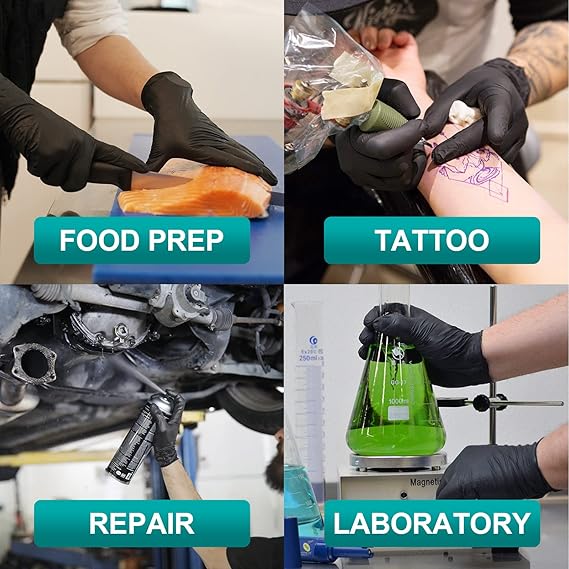
Nitrile gloves applications fields
Nitrile gloves, due to their excellent tear resistance and chemical protective properties, have been widely used in various industries and fields. Here are some specific application scenarios:
In the medical field, the tear resistance of nitrile gloves makes them the preferred choice during surgical procedures and nursing operations. They effectively prevent the gloves from being torn during operations, ensuring the safety of medical staff throughout the surgery.
In the food processing industry, nitrile gloves are commonly used on food contact surfaces, such as kitchens, restaurants, and food processing plants. Their tear resistance ensures the durability of the gloves during handling and processing of ingredients, while the food-grade material guarantees food hygiene and safety.
In industrial production environments, nitrile gloves are widely used in the handling of harmful substances such as chemicals, paints, and dyes. Their chemical resistance makes them less likely to be damaged when in contact with these substances, reducing the workers’ exposure to hazardous chemicals.
In the automotive manufacturing and maintenance field, nitrile gloves are often used during assembly and repair processes to protect workers’ hands from the injuries caused by sharp parts. The tear resistance ensures that the gloves do not easily tear during repetitive operations.
Laboratory researchers also choose nitrile gloves when handling reagents and experimental materials. The gloves’ chemical resistance and tear resistance provide adequate protection while maintaining good tactile sensation and flexibility.
In agricultural activities, nitrile gloves are also a helpful companion for farmers. Their tear resistance prevents finger injuries during planting, harvesting, and moving animals, reducing inconvenience during work.
Nitrile gloves are also popular in household cleaning and gardening activities. They provide good protection during cleaning kitchen utensils, handling cleaning agents, and gardening operations.
In the field of safety protection, nitrile gloves are also widely used. For example, firefighters and rescue personnel wear nitrile gloves to prevent damage to their hands from chemicals and high temperatures during firefighting and rescue operations.
With the increasing awareness of environmental protection, the application of nitrile gloves in environmental cleaning is also expanding. They are recyclable, reducing the environmental burden.
In summary, nitrile gloves, with their tear-resistant, chemical-resistant, and antibacterial properties, play a crucial role in various fields such as medicine, food, industry, laboratories, agriculture, and household cleaning.

Advantage Comparison Analysis
Nitrile gloves exhibit significant advantages compared to other types of gloves in multiple aspects. The following is a comparative analysis of their strengths:
Superior Chemical Resistance: Nitrile gloves have excellent resistance to a wide range of chemicals, including oils, solvents, acids, and bases. Compared to latex gloves, Nitrile gloves offer superior chemical resistance, providing better protection for users against chemical.
Excellent Tensile Strength: The Nitrile material itself has good elasticity and strength, which makes Nitrile gloves less likely to tear when subjected to physical pressure. Compared to natural latex gloves, Nitrile gloves have significantly higher tensile strength, making them suitable for work environments requiring high levels of safety protection.
Feel and Flexibility: Although Nitrile gloves excel in chemical resistance and tensile strength, they may be slightly inferior to latex gloves in terms of feel and flexibility. However, with technological advancements, new Nitrile glove products are maintaining durability while also improving hand sensation and flexibility.
Heat Resistance: Nitrile gloves can maintain their physical properties within a certain temperature range, making them suitable for high-temperature environments. While Nitrile gloves may be slightly less heat-resistant than gloves made of materials like PVC, they still perform better than latex gloves overall.
Cost-Effectiveness: Nitrile gloves are more cost-competitive compared to latex and PVC gloves. Although the price per unit may be slightly higher than that of latex gloves, their durability and versatility result in lower long-term costs.
Safety: Nitrile gloves are widely used in fields such as healthcare, laboratories, and manufacturing, primarily due to their safety. Compared to latex gloves, Nitrile gloves are more friendly to users with latex allergies, reducing the risk of allergic reactions.
Environmental Friendliness: Although the production of Nitrile gloves generates some chemicals, their environmental performance is relatively better than that of other types of gloves. With the increasing awareness of environmental protection, more and more manufacturers are committed to improving the environmental standards of Nitrile gloves.
In summary, Nitrile gloves demonstrate clear advantages in terms of chemical resistance, tensile strength, cost-effectiveness, safety, and environmental friendliness. However, when choosing gloves, users still need to consider specific work environments and requirements, taking into account various performance indicators to select the most suitable product.

Purchasing and Usage Precautions
When selecting tear-resistant Nitrile gloves, the following points should be taken into consideration:
-
Material Selection: The main material of Nitrile gloves is acrylonitrile butadiene rubber (NBR), which has good oil resistance, chemical resistance, and wear resistance. When purchasing, ensure that the gloves are made of 100% Nitrile to avoid the inclusion of other materials that may affect performance.
-
Thickness and Strength: The thickness of gloves typically ranges from 0.15mm to 0.50mm. The thicker the gloves, the stronger the tear resistance. Choose the appropriate thickness of gloves based on the working environment and intensity. For example, cleaners may need thinner gloves, while electricians or maintenance personnel may require thicker ones.
-
Finger Cuff Design: The design of the finger cuff should consider the range of motion and flexibility of the fingers. Full-fingered gloves and split-fingered gloves have their own advantages and disadvantages. Full-fingered gloves provide better protection but may reduce finger flexibility; split-fingered gloves are more flexible but have lower protection. Choose the appropriate design based on specific work requirements.
-
Comfort: Comfort is particularly important when wearing gloves for extended periods. Choose gloves that fit your hand size properly, avoiding either tightness or looseness. Lining materials such as cotton or flannel can increase comfort.
-
Durability and Cleanability: The durability of tear-resistant gloves depends on the quality of the material and the manufacturing process. Choose products from reputable brands with mature production technology. Additionally, the surface of the gloves should be easy to clean and disinfect to maintain hygiene during repeated use.
-
Allergic Reactions: Some individuals may have allergic reactions to Nitrile material, so it is advisable to try them on before purchasing to confirm whether there is an allergy. If necessary, other materials such as latex or neoprene gloves can be chosen.
-
Adaptability to Working Environment: Different working environments have different protective requirements for gloves. For example, gloves should have corresponding protective properties in high or low-temperature environments or when in contact with chemicals. Choose the appropriate gloves based on the specific working environment.
-
Compliance Check: Ensure that the gloves purchased meet relevant safety standards and regulations, such as EN407, to ensure safety during use.
-
Storage and Maintenance: Proper storage and maintenance of gloves can extend their service life. Avoid exposing gloves to extreme temperatures or chemicals, and store them in a dry, well-ventilated area.
-
Replacement Frequency: Replace gloves regularly based on usage frequency and condition to maintain optimal protective effects. Over time, gloves may show signs of wear and tear, and should be replaced promptly.